What Is Oxtail Stew? Jamaican Comfort Food Explained
Phil · 2026-04-15
The Smell That Means Sunday
There is a smell that fills a Jamaican kitchen on Sunday morning and does not leave until evening. Browning sugar in a hot pot. Garlic hitting seasoned meat. Then, hours later, a thick gravy bubbling low and slow while the whole house fills with thyme, allspice, and coconut.
That smell is oxtail. And if you grew up with it, you never forget it.
Oxtail stew is one of the most beloved dishes in Jamaican cooking. It is rich, tender, and deeply comforting. It is also one of the most misunderstood dishes outside the Caribbean. People hear "oxtail" and hesitate. By the end of this, you will not hesitate again.
What Oxtail Actually Is
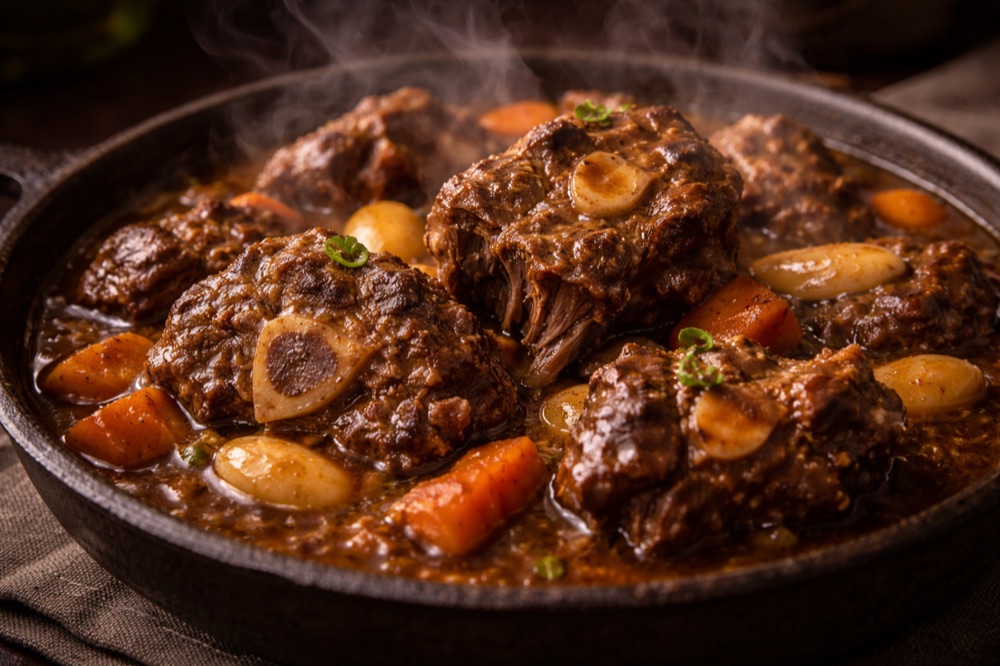
Oxtail is exactly what it sounds like. It is the tail of a cow, cut into thick, round sections through the bone. Each piece has a cross-section of bone in the center surrounded by dark, richly marbled meat.
The magic of oxtail is collagen. The tail is loaded with connective tissue that breaks down during long, slow cooking. That collagen transforms into gelatin. The gelatin makes the gravy thick, silky, and impossibly rich without adding any thickener. No flour. No cornstarch. Just time and heat doing the work.
The meat itself is dark, flavorful, and tender when cooked properly. It has more depth than most beef cuts because the tail is a working muscle with dense marbling. This is not a delicate protein. This is beef with something to say.
The 4-Step Jamaican Method
Jamaican oxtail is not a simple braise. There is a specific technique that separates Jamaican oxtail from any other preparation. Four steps, each one essential.
Step 1: Season and Marinate
The oxtail gets seasoned heavily. Garlic, thyme, allspice (called pimento in Jamaica), scotch bonnet pepper (a fiery Caribbean pepper that adds fruity heat), soy sauce, and green onions. The meat marinates for several hours or overnight. The seasoning needs time to penetrate the bone and connective tissue. Rushing this step ruins the final product.
Step 2: Brown in Caramelized Sugar
This is the step that makes Jamaican oxtail different from every other version. Sugar goes into a hot pot with oil until it caramelizes to a deep, dark brown. Then the seasoned oxtail pieces go in. They sear in that caramelized sugar, creating a crust that is savory, slightly sweet, and deeply colored.
This technique is called "browning" in Jamaican cooking. It gives the meat and the eventual gravy a rich, dark color and a complex flavor. Many Jamaican cooks use a bottled browning sauce for convenience, but the traditional method uses raw sugar in the pot.
Step 3: Braise Low and Slow
Water or stock goes in. The pot gets covered. Then you wait. Two to three hours minimum. The oxtail needs this time for the collagen to break down fully. The meat should be tender enough to slide off the bone with gentle pressure.
Butter beans (large lima beans) go in during the last 30 to 45 minutes. They absorb the gravy and become soft, creamy, and deeply flavored. Some cooks also add carrots for a touch of sweetness.
Step 4: Finish the Gravy
The gravy is the crown of this dish. After braising, the liquid should be thick, dark, and concentrated. Some cooks reduce it further with the lid off. The final gravy coats the back of a spoon and clings to every piece of meat.
Good oxtail gravy is what people soak up with rice and peas (kidney beans cooked in coconut milk with thyme and allspice) or hard dough bread (a dense, slightly sweet Jamaican white bread). The gravy alone is worth the price of the plate.
Why Jamaicans Love Oxtail
Oxtail is Sunday dinner. It is the dish that brings families together. Back home in Jamaica, oxtail holds a special place because it rewards patience. You cannot rush it. You have to give it time. That slow process becomes part of the ritual.
It is also a dish that stretches. One pot feeds a crowd. The gravy extends the meal across plates of rice and peas. Families have been cooking oxtail this way for generations. The recipe passes from grandmother to mother to daughter, each one adding their own small touch.
In the US, oxtail has become a cultural symbol for the Jamaican diaspora. Ordering oxtail at a Jamaican restaurant is not just lunch. It is a connection to home.
How to Order Oxtail at a Restaurant
Go early. Most Jamaican restaurants make a set amount of oxtail each day. It takes hours to prepare, and they cannot make more on the fly. Popular spots sell out by early afternoon. If you want oxtail, arrive before 1 p.m.
Expect the highest price on the menu. Oxtail is almost always the most expensive plate. The cut has become increasingly costly due to rising global demand. A plate typically runs $18 to $28 depending on the city. It is worth every dollar.
Ask for extra gravy. This is the insider move. The gravy makes the plate. Extra gravy over your rice and peas transforms a great meal into an unforgettable one. Most restaurants will add extra if you ask.
Pair it with rice and peas. This is not optional. Oxtail and rice and peas is one of the great food combinations. The coconut-seasoned rice absorbs the thick gravy perfectly. Add fried plantains (sweet cooking bananas fried golden) on the side for sweetness that balances the savory richness.
Frequently Asked Questions
What part of the cow is oxtail?
Oxtail is the tail of a cow, cut into thick, round sections through the bone. Each piece contains a center bone surrounded by richly marbled, collagen-heavy meat that becomes extremely tender during long braising.
Why is oxtail so expensive?
Oxtail has become expensive due to increased global demand. Each cow produces only one tail. The long cooking time also adds to restaurant costs. It is typically the most expensive item on a Jamaican restaurant menu.
How long does oxtail take to cook?
Jamaican oxtail braises for two to three hours minimum. The long cooking time is necessary for the collagen to break down, the meat to become tender, and the gravy to develop its rich, thick texture.
What does oxtail taste like?
Oxtail has a deep, beefy flavor that is richer than most cuts. The meat is tender and falls off the bone. The Jamaican preparation adds layers of garlic, allspice, thyme, and caramelized sugar. The gravy is thick, savory, and slightly sweet.
What should I order with oxtail?
Rice and peas is the essential pairing. The coconut milk rice absorbs the oxtail gravy perfectly. Add fried plantains for sweetness and steamed vegetables or callaloo (a leafy green side dish) for balance. Ask for extra gravy.
---
Find oxtail near you before it sells out. Search your city on [JamaicanFoodFinder.com](https://www.jamaicanfoodfinder.com) and call ahead to make sure your spot still has it. The early eater gets the oxtail.