Scotch Bonnet vs Habanero: Why the Pepper Matters in Jamaican Food
Phil · 2026-04-15
A Pepper That Smells Like the Caribbean
Slice a scotch bonnet pepper (a fiery Caribbean pepper essential to authentic Jamaican flavor) in half. Before the heat hits your fingers, the aroma hits your nose. It is fruity, sweet, almost tropical. Nothing like the sharp, aggressive burn you expect from a pepper this hot. That sweetness is exactly why Jamaican cooks refuse to substitute it.
The habanero looks almost identical. It packs the same level of heat. Most grocery stores in America carry it while scotch bonnets can be hard to find. So people swap them and assume the dish will taste the same.
It will not. And understanding why changes how you think about Jamaican food.
Scotch Bonnet: The Caribbean Original
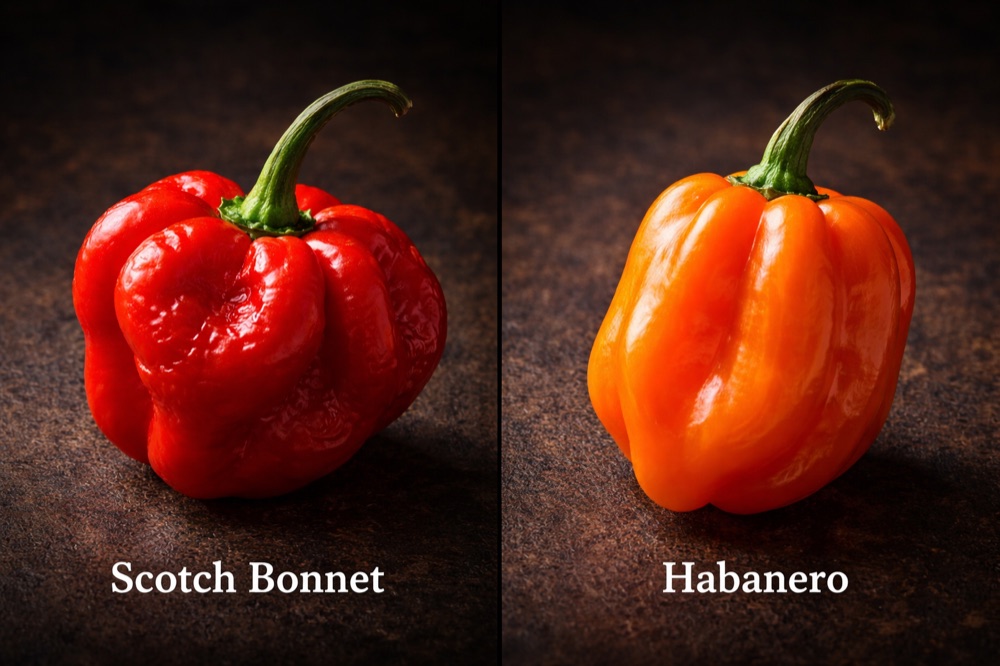
The scotch bonnet is native to the Caribbean. It has been part of Jamaican cooking for centuries. The name comes from its shape, which resembles a tam o'shanter (a traditional Scottish bonnet). The pepper is small, squat, and deeply wrinkled.
On the Scoville scale, scotch bonnets range from 100,000 to 350,000 units. That is extremely hot. But heat is only part of the story.
The defining characteristic of scotch bonnet is its flavor. Cut through the heat and you find a fruity, almost sweet taste with tropical undertones. Some people describe it as slightly floral. Others compare it to a very hot apricot. This sweetness is what makes scotch bonnet irreplaceable in Jamaican cooking. The heat is the vehicle. The fruit-forward flavor is the destination.
Habanero: Close but Different
The habanero comes from South America, likely originating in the Amazon region. It eventually became widely cultivated in Mexico and is now one of the most common hot peppers in American grocery stores.
Habaneros hit the same Scoville range as scotch bonnets. Between 100,000 and 350,000 units. In terms of pure heat, they are nearly identical. But the flavor profile is noticeably different.
Habaneros tend toward smoky and citrusy notes. Some varieties have a slightly bitter finish. The pepper is more elongated and pointed than the scotch bonnet's rounded, crumpled shape. The flavor is sharp and bright rather than sweet and tropical.
This is not a bad pepper. It is a different pepper. And in Jamaican cooking, that difference matters.
Side-by-Side Comparison
| | Scotch Bonnet | Habanero |
|---|---|---|
| Origin | Caribbean | South America |
| Scoville Range | 100,000 to 350,000 | 100,000 to 350,000 |
| Shape | Squat, tam-shaped, wrinkled | More elongated, pointed |
| Flavor | Sweet, fruity, tropical | Smoky, citrusy, bright |
| Color (Ripe) | Red, orange, yellow | Red, orange, yellow |
| Availability (US) | Caribbean markets, specialty stores | Most grocery stores |
| Core Use | Jamaican and Caribbean cooking | Mexican and Latin American cooking |
Why the Difference Matters in Jamaican Food
Scotch bonnet's fruity sweetness is a core flavor in three pillars of Jamaican cooking.
Jerk seasoning relies on scotch bonnet. The pepper's sweet heat blends with allspice (called pimento in Jamaica), thyme, and garlic to create that distinctive jerk flavor. Substitute a habanero and the jerk tastes sharper, less round, less Caribbean. The smokiness of habanero competes with the pimento wood smoke. Scotch bonnet complements it.
Pepper sauce made from scotch bonnets has a bright, fruity burn. Jamaican pepper sauce is not just about delivering heat. It adds flavor to every dish it touches. That tropical sweetness in the pepper is what separates Jamaican pepper sauce from generic hot sauce.
Curry dishes use scotch bonnet to add warmth without overwhelming the aromatic curry spices. The pepper's sweetness balances the earthy turmeric and allspice. Habanero's citrusy sharpness would shift the entire flavor profile of curry goat (slow-cooked goat meat in Jamaican curry spices) or curry chicken.
Where to Find Scotch Bonnets in the US
Finding scotch bonnets outside of Caribbean neighborhoods used to be difficult. That has improved in recent years.
Caribbean grocery stores and West Indian markets are the most reliable source. Cities with large Jamaican communities like New York, Miami, Atlanta, and Houston have multiple options. Some regular grocery stores in diverse neighborhoods carry them, usually in the specialty pepper section.
Online ordering has made scotch bonnets accessible nationwide. Several Caribbean food suppliers ship fresh or frozen scotch bonnets directly to your door. Dried scotch bonnet flakes and scotch bonnet hot sauces are also excellent pantry staples.
Substitution Advice
If you absolutely cannot find scotch bonnets, a habanero will provide the same heat level. Add a small amount of mango or pineapple to your marinade or sauce to compensate for the missing fruity sweetness. This is not perfect, but it gets you closer.
A better option is scotch bonnet pepper sauce, which many Caribbean grocery stores carry. A tablespoon of good scotch bonnet sauce in your recipe adds both the heat and the authentic flavor.
Never substitute with cayenne, jalapeno, or serrano peppers. These are in a completely different heat range and flavor category. The dish will not taste Jamaican.
Frequently Asked Questions
Are scotch bonnet and habanero the same pepper?
No. They are closely related members of the Capsicum chinense family, but they are different cultivars. They have similar heat levels but distinctly different flavor profiles. Scotch bonnet is sweeter and fruitier. Habanero is smokier and more citrusy.
Which is hotter, scotch bonnet or habanero?
They are nearly identical in heat, both ranging from 100,000 to 350,000 Scoville units. Neither is consistently hotter than the other. Individual peppers vary based on growing conditions and ripeness.
Can I use habanero instead of scotch bonnet in Jamaican recipes?
You can, but the flavor will be different. Habanero provides the same heat but lacks the fruity, tropical sweetness that scotch bonnet brings. For the most authentic Jamaican flavor, scotch bonnet is worth seeking out.
Where can I buy scotch bonnet peppers?
Caribbean grocery stores, West Indian markets, and some regular supermarkets carry scotch bonnets. Online suppliers ship fresh and frozen scotch bonnets nationwide. Cities with large Caribbean communities have the best availability.
Why do Jamaican cooks insist on scotch bonnet?
The scotch bonnet's unique fruity sweetness is a foundational flavor in jerk seasoning, pepper sauce, and curry. No other pepper replicates that specific taste. Jamaican cooking is built around this pepper the way Italian cooking is built around basil and olive oil.
---
Taste the difference for yourself. Find a Jamaican restaurant that uses real scotch bonnet in every dish. Search your city on [JamaicanFoodFinder.com](https://www.jamaicanfoodfinder.com) and discover authentic Jamaican flavors near you.