Ackee and Saltfish: Everything to Know About Jamaica's National Dish
Phil · 2024-05-15
Saturday Morning, the Kitchen Already Loud
The radio is on. A pot is boiling. Somebody is already arguing about how much pepper to use. This is how Saturday morning starts in a Jamaican kitchen when ackee and saltfish is on the menu.
Ackee and saltfish (salted cod cooked with ackee, Jamaica's national fruit) is the most important dish in Jamaican food. It is breakfast, it is identity, and it is the one meal that every Jamaican can agree on. Growing up in St. Ann parish, this was the dish that defined the weekend.
What Is Ackee?
Ackee is a tropical fruit that came to Jamaica from West Africa in the 1700s. It arrived on slave ships, carried by the same people who would transform Jamaican food forever.
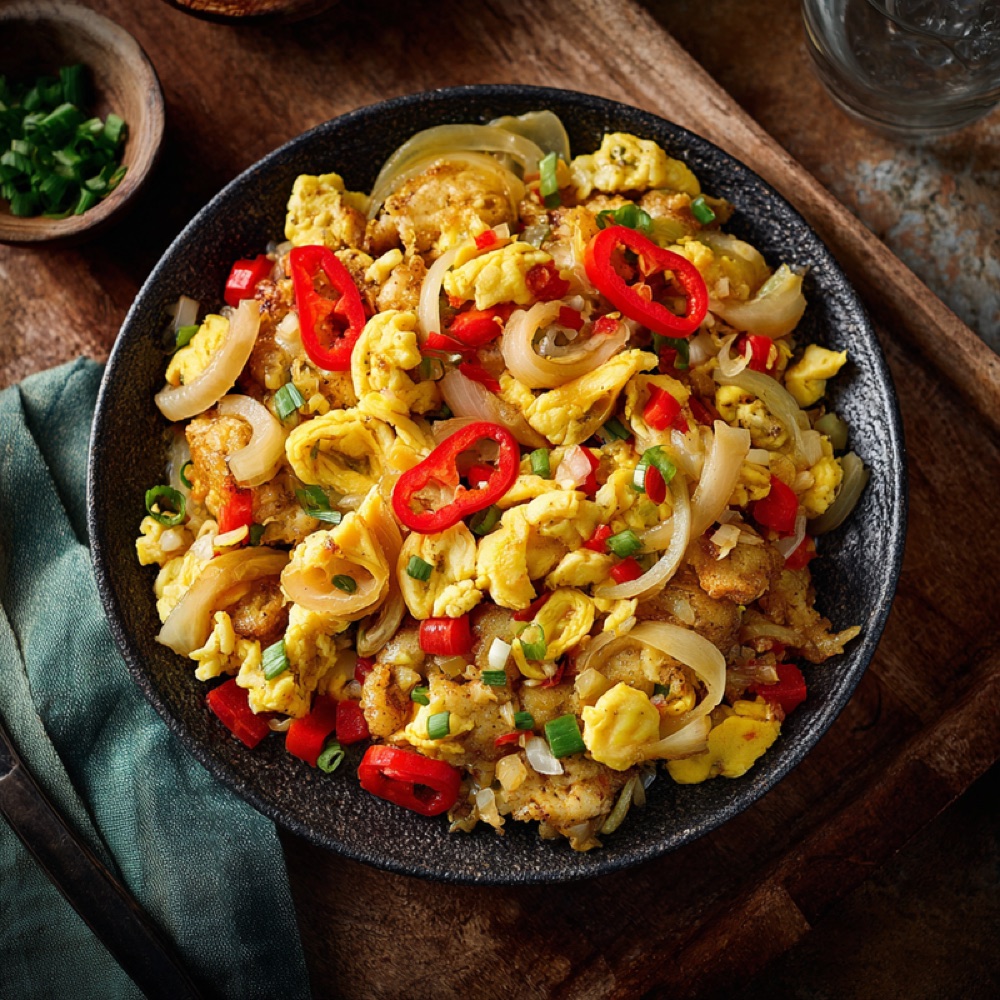
The fruit grows on tall trees and ripens to a bright red pod. When it opens naturally, it reveals soft, yellow flesh that looks and cooks like scrambled eggs. That texture is what makes ackee so unique. No other fruit behaves like this in a pan.
Here is the important part. Unripe ackee is toxic. The fruit must open on the tree naturally before it is safe to eat. This is why canned ackee is the most common form you will find in the US. It is pre-cooked and safe. Fresh ackee is rare outside Jamaica, but canned ackee works well when prepared properly.
What Is Saltfish?
Saltfish (dried and salted cod) is a staple of Jamaican cooking that dates back to the colonial era. The British brought salted cod to the Caribbean as a cheap source of protein for enslaved people. It was preserved for the long sea journey and could last for months.
What started as survival food became something extraordinary. Jamaicans transformed saltfish into the base of their most beloved dish. The salt gets soaked out. The fish gets flaked. Then it meets the ackee, and everything changes.
How Ackee and Saltfish Is Made
The process is simple but requires care.
First, the saltfish soaks in water overnight or gets boiled to remove the excess salt. You want flavor, not a salt block. The fish gets flaked into small pieces after draining.
The ackee gets boiled gently until tender. If you are using canned ackee, drain it and handle it carefully. Ackee falls apart fast. You want soft pieces, not mush.
In a hot pan, onions, tomatoes, and scotch bonnet pepper (a fiery Caribbean pepper essential to Jamaican flavor) cook down with a little oil. The saltfish goes in first. Then the ackee gets folded in at the end. Folded, not stirred. That is the key. Stirring destroys the ackee. You fold it gently so the yellow pieces stay whole.
The finished dish is creamy, savory, and lightly spiced. It looks like a golden scramble with flakes of fish running through it.
When Jamaicans Eat It
Ackee and saltfish is a breakfast dish. Saturday and Sunday mornings are prime time. But plenty of Jamaicans eat it any day of the week.
The sides matter just as much as the main dish. Fried dumplings (dense, golden fried dough) are the most popular pairing. Hard dough bread toasted on both sides is another classic. Green bananas (boiled, starchy, and mild) balance the richness. Fried plantain (sweet cooking banana, sliced and fried until golden) adds sweetness. Breadfruit (a starchy fruit, roasted or fried) rounds out a full plate.
This is not a light breakfast. This is fuel. Jamaicans eat heavy in the morning and carry that energy through the day.
Where to Find It in the US
Ackee and saltfish is on the menu at most authentic Jamaican restaurants in the US. Cities with large Jamaican populations like New York, Miami, Atlanta, and Houston are your best bet.
Look for restaurants that list it as a breakfast or brunch item. Some spots serve it all day. The key is finding a place that folds the ackee properly and seasons the saltfish well. If the plate looks mushy or bland, that is not the real thing.
You can also make it at home. Canned ackee is available at Caribbean grocery stores and online. Grace brand is the most common and reliable option.
Frequently Asked Questions
What does ackee taste like? Ackee has a mild, creamy flavor and a soft texture similar to scrambled eggs. It does not have a strong fruity taste. When cooked with saltfish, onions, and scotch bonnet, it absorbs all those flavors and becomes savory and rich.
Is ackee safe to eat? Yes, when properly ripened and prepared. The fruit must open naturally on the tree before picking. Unripe ackee contains a toxin called hypoglycin that can cause serious illness. Canned ackee sold in stores is already cooked and completely safe.
Why is ackee and saltfish Jamaica's national dish? Ackee and saltfish represents Jamaica's cultural history. Ackee came from West Africa. Saltfish came from the colonial trade. Jamaicans combined them into something entirely new. The dish carries centuries of resilience, creativity, and flavor.
Can I find ackee and saltfish in the US? Yes. Most authentic Jamaican restaurants in cities like New York, Miami, Atlanta, and Houston serve ackee and saltfish. You can also buy canned ackee at Caribbean grocery stores or online and make it at home.
What do you eat with ackee and saltfish? Traditional pairings include fried dumplings, hard dough bread, boiled green bananas, fried plantain, and roasted breadfruit. Some people serve it with white rice. The sides add starch and balance to the savory main dish.
Is ackee a fruit or a vegetable? Ackee is a fruit. It grows on trees and ripens inside a red pod. But it is always cooked and served savory in Jamaican cuisine. Think of it the way you think of a tomato. Technically a fruit, but it lives on the savory side of the plate.
Ready to try ackee and saltfish from a real Jamaican kitchen? Search your city or ZIP code on JamaicanFoodFinder.com and find an authentic spot near you. It takes 30 seconds.